
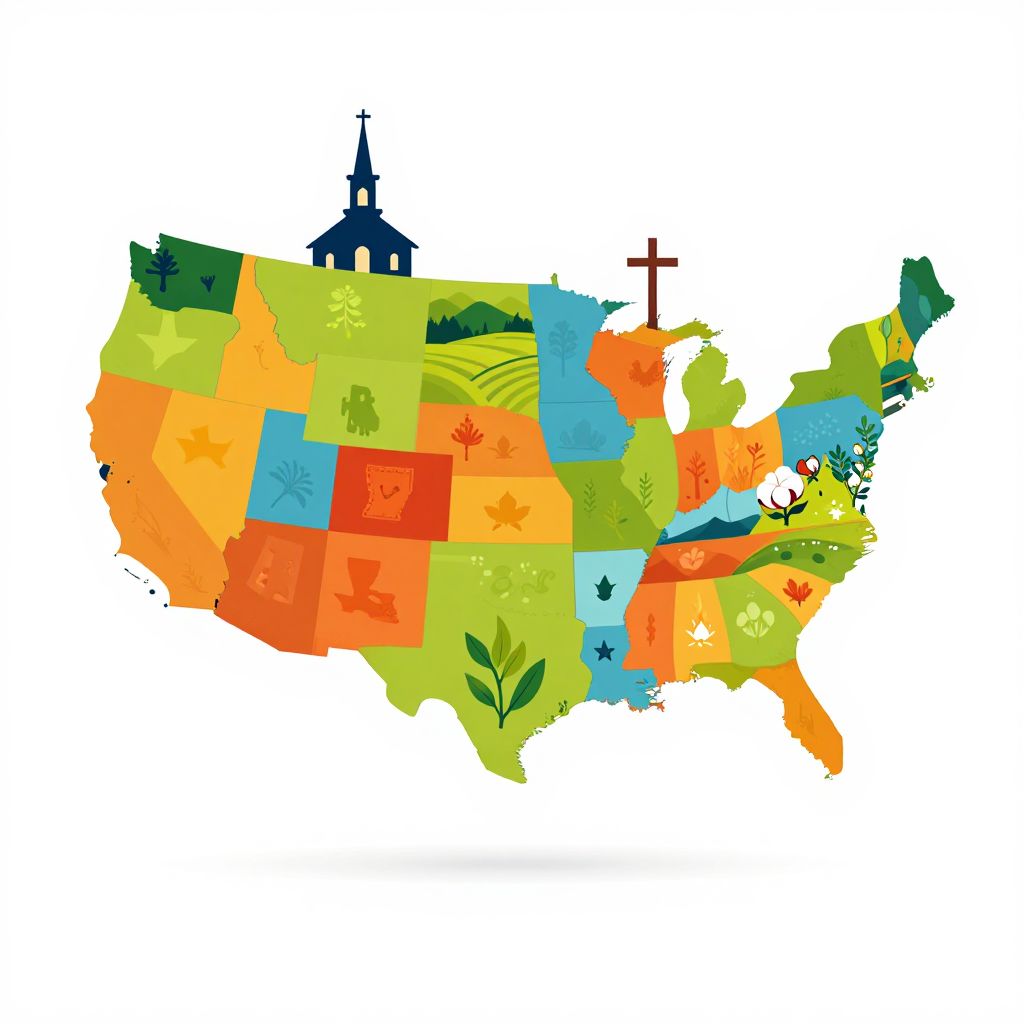
Have you ever wondered why some regions of the United States seem to have a deep-rooted connection to Christianity? This is often referred to as the Bible Belt, a term that encompasses areas where faith and religious practice profoundly influence culture and community life. Understanding the Bible Belt enriches our appreciation for various expressions of Christian faith in America.
This article will explore the Bible Belt’s significance, its historical roots, and the rich tapestry of beliefs that define it, all grounded in Scripture and the character of God.
What Is The Bible Belt?
The Bible Belt refers to a region in the southern United States where evangelical Protestantism plays a dominant role in the cultural and social landscape. This area is characterized by a high level of church attendance, strong biblical beliefs, and a commitment to teaching Christian values.
Geographic Boundaries
The Bible Belt is not an official designation and does not have strict boundaries. Generally, it covers a significant portion of the southern United States, including states like:
- Texas
- Oklahoma
- Arkansas
- Tennessee
- Kentucky
- Mississippi
- Alabama
- South Carolina
These states are known for their deep Christian roots and cultural traditions that emphasize faith.
Historical Context
The term “Bible Belt” emerged in the early 20th century, yet the foundation for its influence traces back to earlier American history. The Great Awakening, a series of religious revivals in the 18th and 19th centuries, significantly shaped the southern states’ religious landscape.
Many key figures in these revivals emphasized personal conversion, fervent prayer, and social reform, which established patterns of worship that persist today.
Denominational Diversity
The Bible Belt is home to a variety of Christian denominations, with the most prominent being:
- Baptists
- Methodists
- Pentecostals
- Church of Christ
This diversity reflects a rich heritage of spiritual expression. Each denomination contributes unique practices and doctrines while remaining united in core beliefs centered on Jesus Christ.
Country Music and Christianity
One can often hear country music seasoned with Christian themes echoing across the Bible Belt. This genre of music frequently draws on biblical imagery and values, resonating deeply with the region’s culture. Gospel music also plays a vital role, uniting communities in worship and faith celebrations.
Scriptural Influence
Scripture shapes the beliefs and actions of individuals in the Bible Belt. The Bible serves as a moral compass, guiding daily decisions and interpersonal relationships. Passages such as Romans 12:2 encourage believers to seek transformation and uphold their faith amid a changing world.
Many people reflect on Proverbs 22:6, which states, “Start children off on the way they should go, and even when they are old they will not turn from it.” This verse underscores the importance of instilling biblical values from an early age.
Community and Social Life
In the Bible Belt, community life often revolves around the church. Local congregations serve as centers for social interaction, support, and outreach. Through various ministry programs, such as food drives and youth groups, churches foster connection among members and extend love to their neighborhoods.
This strong sense of community aligns with Galatians 6:2, which teaches, “Carry each other’s burdens, and in this way you will fulfill the law of Christ.” Christians actively seek to support one another in their spiritual journeys.
Faith and Politics
In many instances, faith heavily influences political views and activities. Churches often engage in discussions surrounding moral issues, including family values, education, and community welfare. Political beliefs frequently reflect the teachings of Scripture, demonstrating how faith intersects with civic responsibilities.
The Role of Evangelism
Evangelism plays a critical role in Bible Belt culture. Many Christians feel a mandate to share the Gospel with others. This drive is rooted in the Great Commission found in Matthew 28:19-20, where Jesus commands His followers to make disciples of all nations.
Churches regularly host events focused on outreach, inviting people to explore faith in a welcoming environment. This proactive approach aims to share the transformative power of God’s love.
Challenges of the Bible Belt
The Bible Belt faces several challenges, including skepticism toward organized religion and questions about authenticity. People often grapple with their experiences of faith in light of societal changes. Some see a disconnect between the teachings of Jesus and how His followers live.
This brings us to the call of James 1:22, which urges believers to “be doers of the word, and not hearers only.” The challenge lies in demonstrating genuine faith through actions that reflect Christ’s love.
The Bible Belt Today
In today’s society, the Bible Belt experiences a blend of tradition and modernization. While many communities still hold firmly to biblical principles, generational shifts have brought new perspectives and dialogues about faith.
Emerging Trends
As younger generations grow and new churches emerge, there is a noticeable trend toward more inclusive and diverse expressions of Christianity. This development invites reflection on how to engage a broader audience while remaining rooted in biblical truth.
What does this evolution mean for the classic understanding of the Bible Belt? It opens doors for dialogue and understanding among differing perspectives, which can deepen the collective faith experience.
The Importance of Relationship
In navigating faith both individually and collectively, relationships remain paramount. Building connections with fellow Christians and those who are seeking can lead to fruitful discussions about belief and understanding. 1 Thessalonians 5:11 reminds believers to “encourage one another and build each other up.” Regular fellowship nurtures spiritual growth.
Practical Applications of Faith in the Bible Belt
As a Christian in the Bible Belt, numerous practical steps can deepen one’s faith and witness to others:
- Engage in regular Bible study and prayer.
- Attend church services to cultivate community.
- Participate in outreach programs to serve the local community.
- Share personal faith stories with friends and family.
- Foster relationships with those of different beliefs for meaningful dialogue.
These steps align with the heart of what it means to live out one’s faith in tangible ways.
Conclusion
The Bible Belt embodies a unique convergence of faith, culture, and community. Understanding its historical roots, diverse expressions, and evolving dynamics provides insight into the richness of Christian life in this region. As Christians, we should all seek to represent Christ authentically, upholding His teachings through love and action.
Let us engage in prayer to seek God’s guidance in living out our faith every day. Ask the Lord how you might share His love with those around you and encourage them in their spiritual journey.
For those seeking to explore more faith-based topics and articles, you can learn about Bible journaling and what it means to be a Bible thumper. Together let us encourage one another in our walks of faith.