
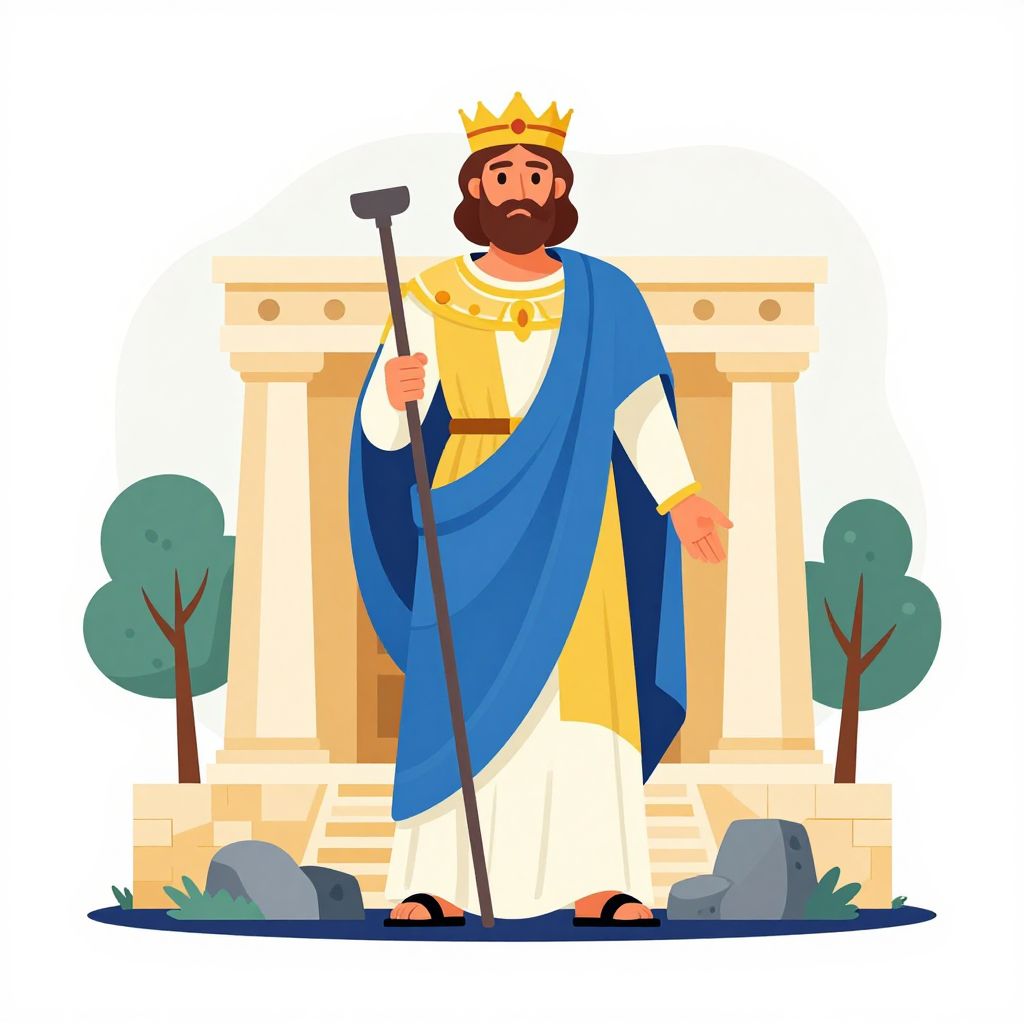
Have you ever wondered how God equips His people to rebuild and restore? What does it look like to answer a call amidst challenges? Zerubbabel, a key figure in the Bible, embodies a powerful response to such questions. His story reveals insights into leadership, faith, and God’s faithfulness to His promises.
This article explores who Zerubbabel is in the Bible and why his role matters today. Through his life and actions, we can glean principles for living out our faith in practical, impactful ways.
Who Is Zerubbabel In The Bible?
Zerubbabel is a prominent figure in the Hebrew Bible, specifically in the books of Ezra and Haggai. He served as a leader of the returned exiles from Babylon and played a crucial role in rebuilding the Temple in Jerusalem. His lineage traces back to King David, establishing him as part of a royal line that carries Messianic significance.
Zerubbabel’s Background and Heritage
Zerubbabel’s name means “the one who was born in Babylon.” He was born during the Babylonian exile. Despite being far removed from his ancestral home, he retained his identity and connection to the line of David.
Haggai 1:1 introduces Zerubbabel as the son of Shealtiel, highlighting his noble lineage. His connection to David emphasizes the promise God made to David that his lineage would not be cut off (2 Samuel 7:16).
The Importance of the Restoration
Upon returning to Jerusalem, Zerubbabel faced the monumental task of restoring the Temple. This act symbolized the restoration of Jewish worship and identity. The Temple represented God’s presence among His people, making its reconstruction vital for their spiritual revival.
Zerubbabel’s Leadership in Rebuilding the Temple
Zerubbabel led the first wave of exiles back to Jerusalem around 538 B.C. under the decree of Cyrus the Great (Ezra 1:1–4). His return was not just about physical rebuilding but also spiritual renewal. Central to this process was the reconstruction of the altar and later, the Temple.
He faced considerable opposition from local adversaries who sought to thwart the rebuilding process. Despite these challenges, Zerubbabel remained steadfast. His story illustrates that leadership often requires perseverance in the face of discouragement.
God’s Encouragement to Zerubbabel
In the face of adversity, God sent messages through prophets like Haggai and Zechariah to encourage Zerubbabel. Haggai 2:4–5 calls him to be strong, assuring him of God’s presence amid the difficulties. God’s promise that His Spirit would remain among them provided hope.
The Role of Zerubbabel in Prophecy
Zerubbabel is significant in biblical prophecy, especially in Zechariah 4. Zechariah’s vision of a golden lampstand with two olive trees symbolizes God’s power at work through Zerubbabel. Verse 6 states, “Not by might nor by power, but by my Spirit,” emphasizing that the task would be accomplished through divine intervention, not human strength.
Moreover, God declares in Zechariah 4:9 that Zerubbabel will lay the foundation of the Temple and complete it. This promise serves as a powerful reminder of God’s faithfulness to His people.
The Messianic Significance of Zerubbabel
Zerubbabel also holds a significant place in the genealogy of Jesus Christ. Matthew 1:12 lists him as an ancestor of Jesus, establishing a connection between the royal line of David and the coming Messiah. This lineage reinforces the theme of restoration that is evident in Zerubbabel’s work.
In these challenging times, the world may feel chaotic, much like it did in Zerubbabel’s day. His life teaches several fundamental principles of leadership and faithfulness.
Faithfulness Amidst Adversity
Zerubbabel exemplifies faithfulness amidst opposition. When faced with challenges that threaten to derail God’s work, are we committed to standing firm in our calling?
Trusting in God’s Promises
Zerubbabel trusted in God’s promise that the Temple would be rebuilt. What promises from God do we need to cling to in our lives today? Holding onto God’s Word gives us strength.
Leading with Courage
Courage defines Zerubbabel’s leadership. He motivated the people to rise up and work (Haggai 1:14). Are we stepping into our roles as leaders in our families, churches, and communities with courage?
Zerubbabel’s Historical Context
Zerubbabel lived during a significant period in Jewish history, marked by the end of the Babylonian exile. Understanding the historical context helps illuminate the challenges he faced.
The Babylonian Exile and Its Aftermath
The Babylonian exile lasted about seventy years. It was a time of loss and separation from the Temple, their place of worship. The return under Zerubbabel marked a pivotal moment in restoring hope.
Zechariah 1:12–13 directly addresses the people’s weariness after years of exile, highlighting God’s assurance that the time of judgment was over, and restoration would begin.
Upon their return, the exiles utilized scrolls and documents to navigate the complexities of rebuilding. Ezra 1:1 refers to the prophecy of Jeremiah, guiding them in understanding what was necessary. How do we use Scripture to guide our decisions today?
Lessons from Zerubbabel’s Life
Zerubbabel’s story offers valuable lessons for our spiritual journeys. Reflecting on his experiences can deepen our understanding of God’s workings.
The Importance of Community
Zerubbabel did not work in isolation. He led a community of exiles who rallied together for the rebuilding of the Temple. How vital is community in our spiritual lives? We need each other to encourage and support us.
Zerubbabel embraced his calling. Each of us has a purpose God expects us to fulfill. Are we identifying and stepping into that role with boldness?
Despite threats and discouragement, Zerubbabel clung to his faith. As we face our trials, let us remember that faith equips us to rise above circumstances.
Zerubbabel in Other Biblical Texts
Zerubbabel appears in other biblical texts outside Ezra and Haggai, shedding light on his broader significance.
As mentioned earlier, Matthew 1 includes Zerubbabel in the genealogy of Jesus. His inclusion establishes connections between the Old and New Testaments, emphasizing continuity in God’s salvation history.
Rabbinic literature highlights Zerubbabel’s righteousness. His actions are sometimes viewed as a foreshadowing of greater things to come, illustrating God’s overarching narrative of redemption.
Zerubbabel’s legacy transcends his time. His commitment to restoring the Temple paved the way for future generations to worship God and maintain their cultural identity.
The Temple remained central to Jewish worship, leading up to the time of Jesus. Zerubbabel’s role had long-lasting effects on religious practices.
His story serves as a reminder of God’s unchanging character. When we face uncertainties, Zerubbabel’s commitment to God provides encouragement that God honors His promises.
Final Reflections on Zerubbabel
Zerubbabel’s life challenges us to contemplate our own spiritual journeys. What can we learn from him about commitment, faith, and following God’s will?
His experiences urge us to seek opportunities to rebuild in our own contexts. Whether it’s nurturing relationships, serving our communities, or investing in our spiritual growth, we can apply Zerubbabel’s perseverance.
Let us ask the Lord for the strength to fulfill our God-given purposes. May we embrace our roles with courage, just as Zerubbabel did. “Lord, help me be faithful in the work you’ve given me, standing strong in the face of opposition.”
Explore more faith-based topics and articles to deepen your understanding of Scripture and its application in your life. You might find it inspiring to learn about Jabez or uncover the story of Daniel in a similar light of faithfulness and purpose.